
Paint & refinish
Auto Painting & Refinishing in Royse City That Matches
Texas sun fades paint fast, and a repaired panel has to match a car that's been parked outside for years. That's exactly the job we're set up for.
Same Code, Different Color
Every car has a paint code, but two cars with the same code can look different after a few summers in North Texas. Batch differences at the factory and years of sun both shift the shade. So we read the actual paint on your car with a computer camera and adjust the formula to match it. Then we spray a test card and hold it against the car before any paint goes on a panel. Spraying happens in a downdraft booth that pulls dust and overspray away from the finish. Finally, we blend the new color into the panels next to it, so your eye can't find the edge.
The Prep and Spray Work Involved
Good paint is mostly prep and patience. Here's what goes into a refinish done the right way.
Camera read of your actual paint
A spectrophotometer reads the color on your car and suggests adjustments to the base formula for a closer match.
Sample sprayed and held to the car
We spray a test card and compare it to the panel in daylight before committing to the color.
Surface prep
The old finish is sanded, cleaned and degreased so new coats bond instead of peeling later.
Masking that protects the rest
Trim, glass and neighboring panels are covered or removed so overspray doesn't land where it shouldn't.
Sealer to even the base
A sealer coat evens out the surface and keeps repair areas from showing through the color.
Clean air moving down and out
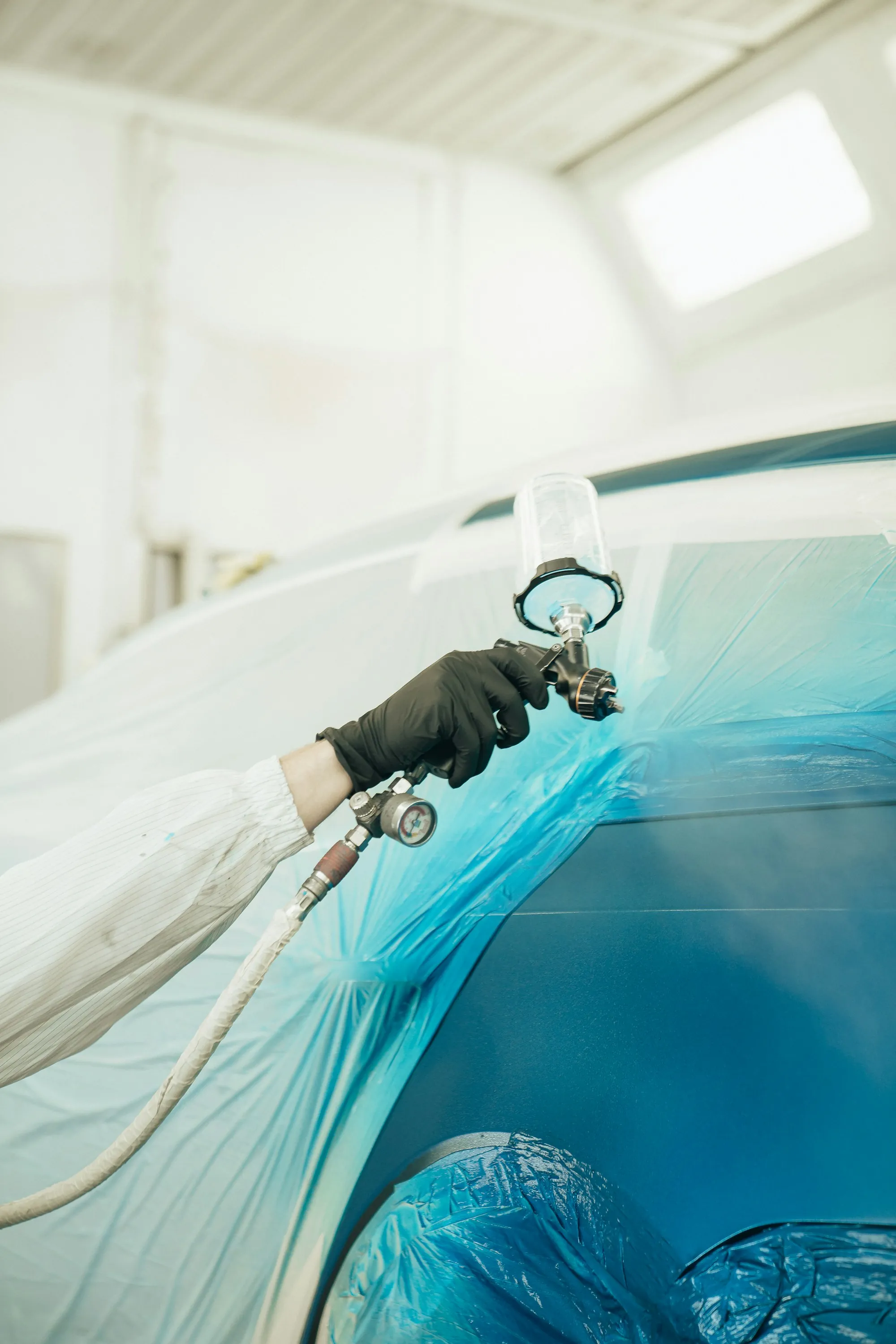
In the downdraft booth, air flows from ceiling to floor, carrying dust away so the finish lays down clean.
Color faded across the seam
Color is blended into the panels beside the repair, which hides small differences in shade.
Gloss coat, baked and buffed
Clear goes on for shine and protection, cures under heat and gets polished to match the rest of the car.
How We Get the Paint Right
Match, sand and mask
We scan the paint, adjust the formula and spray a test card. Meanwhile the panel is sanded, cleaned and masked. Any repair areas get primer and are sanded smooth. Nothing moves to the booth until the surface is ready.
Spray in the booth
The car goes into the downdraft booth for sealer, base color and clear. Color is blended into neighboring panels as it's applied. Each coat gets the time it needs to flash before the next one. Rushing this stage is how runs and dull spots happen.
Bake, buff, daylight check
The finish cures under heat, then gets wet-sanded and polished where needed. We check it outside in natural light, where mismatches show up. If the color or gloss is off, it goes back for another pass before you ever see it.
Why Our Color Work Holds Up in Daylight
We prove the match first
The test card tells us whether the color is right while it's still easy to adjust.
No shortcuts under the color
Paint only looks as good as what's under it. We don't skip sanding or sealer to save time.
Honest about spot work
If a whole panel needs paint, we won't try to get away with a small spot repair that shows. If a spot repair will do, we won't paint the whole side of the car.
Faded or Mismatched Paint?
Bring the car by and we'll look at the color in daylight with you. Call first so we can set aside time for a proper look.