
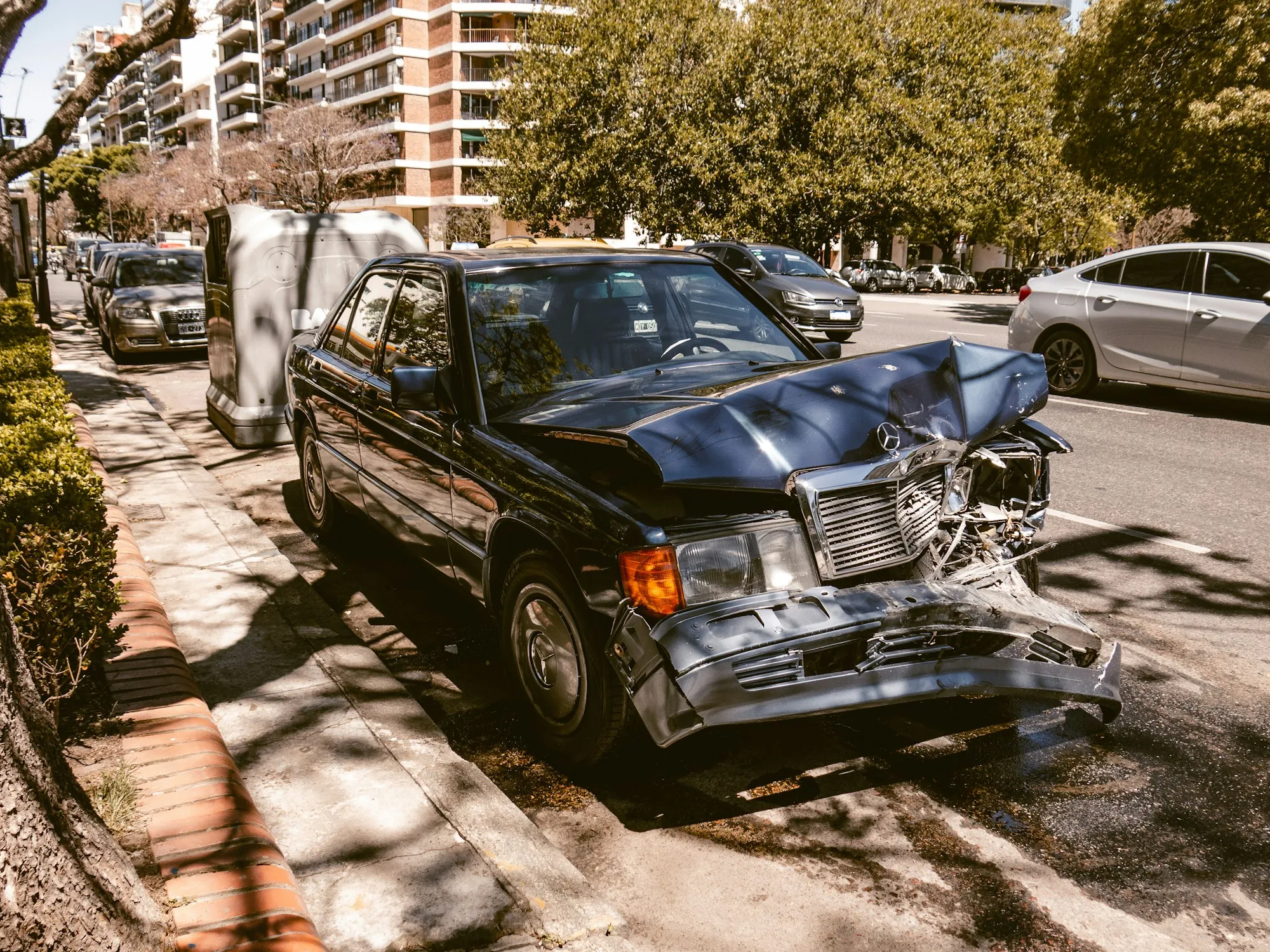
Crash damage
Collision Repair in Royse City, Fixed Right the First Time
Whether it was a rear-end hit in Interstate 30 traffic or a fender bender on State Highway 66, you'll hear exactly what's bent, what's cosmetic and what it takes to fix it right.
What a Collision Job Actually Involves
A crash rarely stops at the part you can see. The bumper cover takes the scuff, but the force keeps going into the absorber, the brackets, the radiator support and sometimes the rails behind them. So we don't price a wreck from the parking lot. We take the damaged area apart, look at every piece and then give you the honest call on what has to be replaced, what can be repaired and what only needs paint. Around Royse City, a lot of our work comes from Interstate 30 traffic and the busy intersections on FM 548 as new neighborhoods fill in. The order never changes: teardown, structure, body, paint, then a final check before you get the keys.
The Work Behind a Proper Wreck Repair
Here is what a full collision job can cover. Not every car needs all of it, and we'll say so when yours doesn't.
Strip-down of the hit zone
We pull the bumper cover, lamps, liners and trim around the impact. Hidden damage gets found at the start, not halfway through the job.
Damage verdict on each part
Every part we pull gets a call: replace, repair or reuse. You hear the reason for each one in plain words.
Unibody brought back to dimension
If the crash moved the structure, we measure it electronically and pull it back to factory dimensions before any outer panel goes on.
Outer panels put right
Doors, fenders, quarters and hoods are repaired when the metal is sound and replaced when it isn't worth saving.
Radiator and condenser check
Front hits often bend cooling parts and their mounts. We check them so the car doesn't overheat a week after pickup.
Paint matched to your car
Color is mixed from your paint code, adjusted by a computer reading and blended into the panels next door.
Systems scanned in and out
We scan for crash codes before the repair and again after, so warning lights and driver aids are sorted before you leave.
Final check on the lot
We go over gaps, lamps, doors and glass, then take a short drive. If something isn't right, the car stays here until it is.
The Order We Fix a Wreck
Look, photograph, explain
You drive the car in or have it towed here. We walk around it with you, photograph the damage and write up a first estimate. If there's a claim, we tell you what the adjuster is likely to focus on. You leave knowing whether this is a simple repair or a bigger job.
Uncover everything the crash did
Once the work is approved, the damaged area comes apart. Anything the first look missed gets documented and sent to the insurer as a supplement. We call you with what we found and what it changes. No extra work starts without approval.
Fix, refinish, test
Structure gets corrected first, then panels, then paint and reassembly. After the final scan and a drive around town, we call you to come get it. At pickup we show you the replaced parts and answer whatever questions you have.
What You Get Bringing a Wreck Here
You get the real picture
If a crash looks worse than it is, we tell you. If it's worse than it looks, we tell you that too, with the damaged parts in hand to show you.
Repairs done in the right order
Painting over a twisted structure is how cars come back crooked. We fix the foundation before anything cosmetic happens.
No juggling three vendors
Structure, panels, paint and scans are all managed here. You deal with one team instead of chasing several.
Need to Know What the Crash Really Did?
The sooner we see the car, the sooner you know what you're dealing with. Call, tell us where it is, and we'll walk you through the next step.